Mahatma Gandhi, Nelson Mandela, Martin Luther King
Elizabeth Blackwell, Katherine Johnson
Elon Musk, Steve Jobs
Steph Curry, Tom Brady
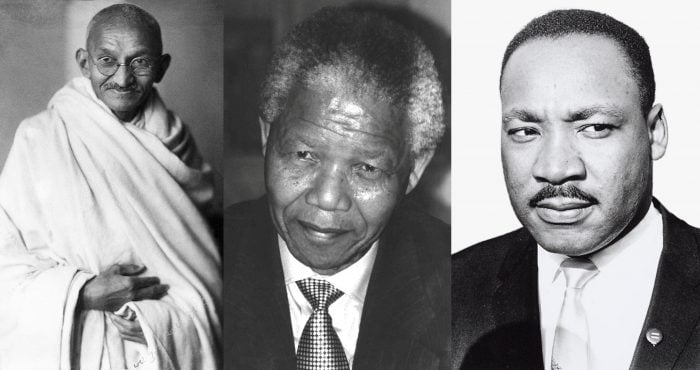
What do all these names have in common apart from them being very famous?
Yes, they all fought against conventional wisdom which was heavily stacked against their success and eventually ended up changing history in their own unique ways.
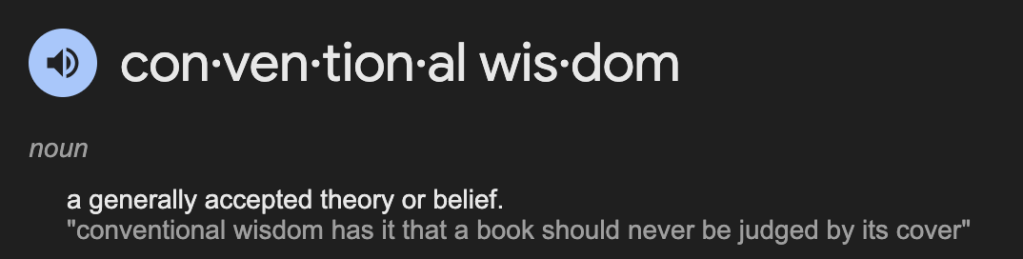
If they heeded to the advice given by their fellow humans, they would have never challenged the Status Quo and accepted their fate. If Mahatma Gandhi had accepted the conventional wisdom that the British Empire was too strong to beat (that too with a non-violent struggle), I would not be sitting here waxing eloquent about challenging Status Quo.
Even if you do not aspire to be the next Gandhi or Mandela or Blackwell, there is always a certain value in questioning the conventional wisdom.
Recollect a situation where someone had written you off when you came up with a new proposal. If you had a strong conviction that your idea would improve on the Status Quo, did you just agree with their assessment or went ahead and disproved them?
Write down both situations where
- you disproved them.
- you agreed with their assessment and stopped trying.
No matter who you are or what your position is, all of us have had to deal with these challenges on a frequent basis. The idea of challenging the established ways of doing things is not merely an act of rebellion, but a vital strategy for growth and sustainability and your career.
Understanding the Status Quo
Before diving into the argument for questioning the status quo, it is crucial to understand what it represents. The status quo refers to the existing state of affairs or current standards and practices in any given context—be it business, education, technology, or social norms. Often, these established methods and ideas are adhered to due to their historical success and the perceived risks associated with change. However, history and market dynamics have repeatedly shown that today’s best practices might not suffice tomorrow.
Benefits of Challenging the Status Quo
Innovation and Optimization
The most compelling argument for questioning the status quo lies in the inherent opportunity for innovation. By challenging existing methods and ideologies, individuals and organizations can discover more efficient, effective, and sustainable ways to achieve their goals. This process often leads to optimization of processes that can significantly enhance productivity and competitiveness.
Learning and Growth
Even when the act of questioning the status quo does not result in immediate success, the knowledge gained through such endeavors is invaluable. This learning happens on two levels: understanding the specific area being questioned and acquiring meta-cognitive skills that enhance problem-solving and critical thinking abilities. These skills are transferable across various domains and are critical in personal and professional development.
Risks and Considerations
Potential for Failure
Questioning the status quo inherently involves risks, including the possibility of failure. New methods can fail to provide the desired outcomes, leading to financial loss or other setbacks. However, these failures are often overstated. The learnings from these experiences can pave the way for future successes, thereby mitigating the long-term risks involved.
Resistance to Change
Another significant challenge is the resistance to change. Individuals and organizations often prefer stability and predictability, which makes them wary of adopting new approaches. Overcoming this inertia requires effective communication of the potential benefits and managing the transition carefully to ensure buy-in from all stakeholders.
Case Studies and Examples
- Mahatma Gandhi — British empire was invincible. But, through tremendous conviction and perseverance, Gandhi led India to Freedom through Ahimsa (Non-Violent Struggle).
- Elizabeth Blackwell – Back when women were not capable of becoming doctors, Elizabeth Blackwell challenged the Status Quo. Despite being rejected from 29 Medical Colleges of the time, she become the First Female Doctor and paved the path many women to become doctors
- Tom Brady — He was selected in the 6th round (last round) as a backup quarterback. One of the scouts commented “Awful. Not even on my board. Weak. He’ll make somebody a good husband or a good medical salesman.” . Now, he disproved everyone and went on to become the Greatest QB of all time with 7 Championships.
Conclusion
In conclusion, questioning the status quo is a powerful tool for driving innovation, learning, and growth. It is essential for individuals aiming to remain relevant and competitive in a constantly changing environment. While there are risks associated with this approach, the potential benefits—both personal and organizational—far outweigh them. By fostering a culture that encourages questioning and supports innovative thinking, individuals and organizations can ensure their continued relevance and success in an unpredictable world.
 BYC
BYC 

Leave a comment