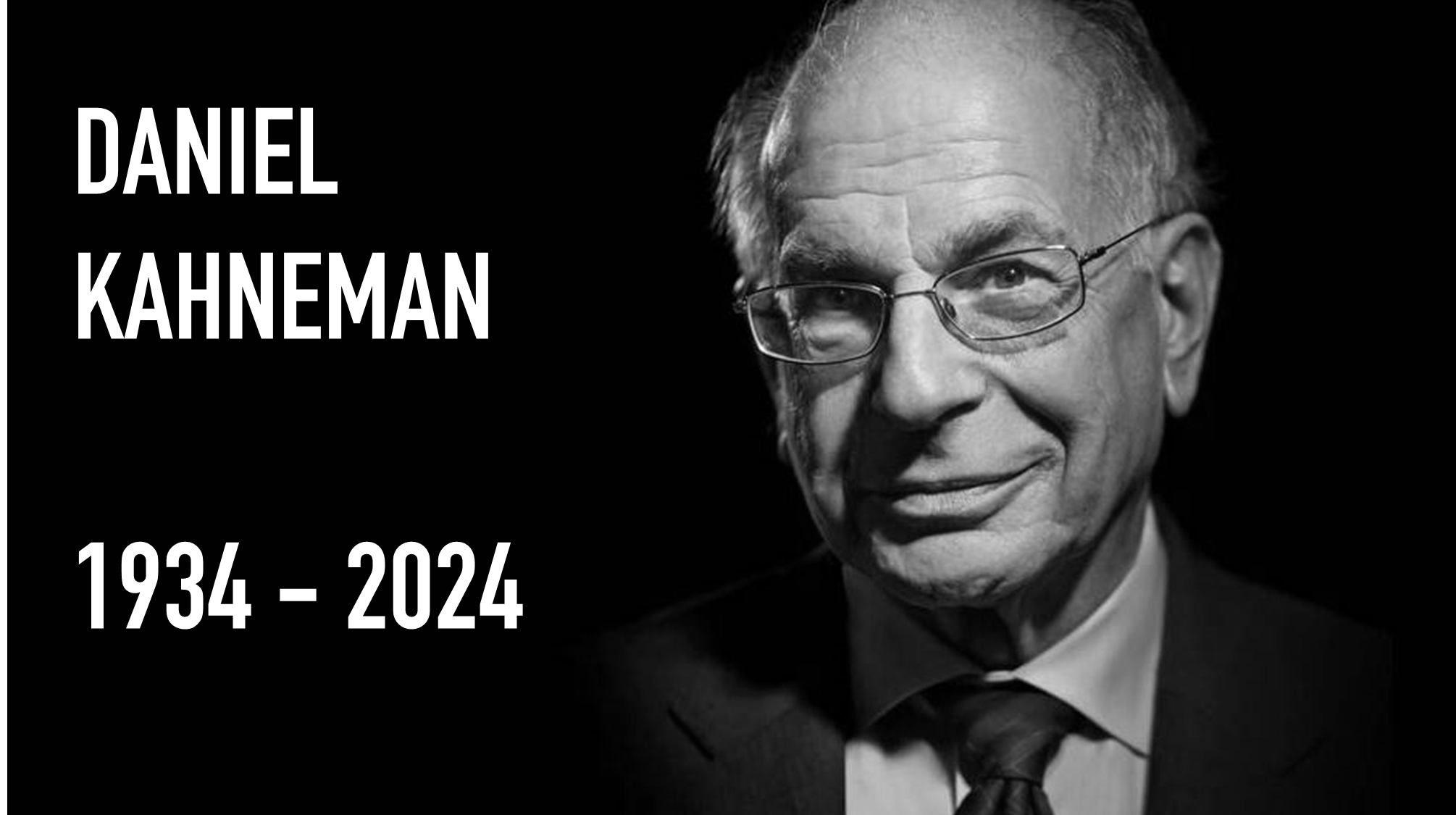
Dr. Daniel Kahneman, a towering figure in the fields of psychology and economics, has left an indelible mark on how we understand human thought and decision-making. His groundbreaking work, which spans several decades, bridges the gap between psychological theory and economic reality, challenging and reshaping conventional wisdom on how decisions are made. As the recipient of the 2002 Nobel Memorial Prize in Economic Sciences—a testament to his profound impact—Kahneman’s research has fundamentally altered our perception of rationality in economics.
Born in 1934 in Tel Aviv, Israel, and spending his formative years under the cloud of World War II, Kahneman’s early experiences with human vulnerability and resilience undoubtedly shaped his compassionate and nuanced view of human nature. His academic journey led him to the study of psychology, where he would, alongside his longtime collaborator Amos Tversky, pioneer the field of behavioral economics. Together, they unveiled the cognitive biases and heuristics that influence everyday decision-making, unveiling the often-irrational underpinnings of economic behavior.
Kahneman’s seminal work, “Prospect Theory: An Analysis of Decision under Risk,” co-authored with Tversky in 1979, introduced a revolutionary framework for understanding how people make decisions involving uncertainty and risk. This theory illuminated the asymmetry between how we treat gains versus losses, encapsulating the principle of loss aversion and the deviations from expected utility theory. Kahneman’s exploration of the human psyche’s intricacies, through the lens of judgment and decision-making, has provided invaluable insights into the nature of human error and the potential for improvement.
His best-selling book, “Thinking, Fast and Slow,” published in 2011, brought his complex theories into the public domain, making the nuances of cognitive psychology and behavioral economics accessible to a broad audience. Through engaging narratives and compelling evidence, Kahneman invites readers into a deep exploration of the two systems of thought that drive our judgments and choices: the fast, intuitive, and emotional System 1, and the slower, more deliberative, and more logical System 2. This work not only popularized his academic findings but also offered practical advice for making better decisions in both personal and professional contexts.
Dr. Kahneman’s contributions extend beyond his theoretical innovations. His humble demeanor, intellectual generosity, and collaborative spirit have inspired countless researchers, practitioners, and policymakers. He has fostered a multidisciplinary approach to understanding human behavior, encouraging a fusion of insights from psychology, economics, political science, and beyond. His legacy is not just in the theories he helped to construct but also in the vibrant, cross-disciplinary community of inquiry he helped to cultivate.
In paying tribute to Dr. Daniel Kahneman, we celebrate a mind that has profoundly reshaped our understanding of the human condition. His work challenges us to reconsider the foundations of economic theory, to embrace the complexity of human cognition, and to strive for a deeper understanding of the choices that shape our lives. As we continue to grapple with the complexities of human decision-making, Kahneman’s research remains a beacon of insight, guiding us toward a more nuanced and compassionate understanding of ourselves and each other.
 BYC
BYC 
Leave a comment